Ukraine's uncrewed systems are becoming product lines
Recent reports on Ukrainian ground robots, sea drones, and mesh radios point to a shared pattern: combat pressure is turning small defense teams into faster, more modular suppliers.
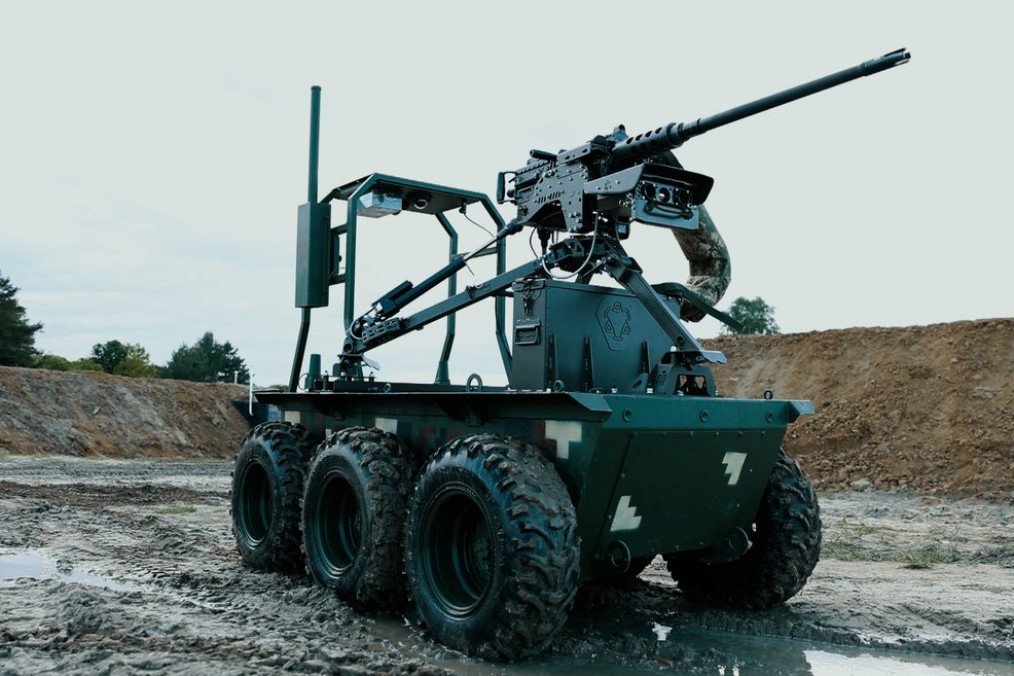
Several Ukrainian systems reports are worth reading together rather than as isolated product announcements. The pattern is not simply more drones. It is the emergence of battlefield-shaped product lines across land, sea, and communications.
On land, reporting on Ravlyk describes a six-wheeled platform from Ukrainian Unmanned Technologies that can carry or tow heavy loads and accept mission kits for logistics, casualty evacuation, sensing, electronic warfare, or weapons. The tactical point is straightforward: if units can push ammunition, equipment, sensors, or expendable firepower forward without exposing soldiers as often, UGVs become part of the force design rather than a novelty.
At sea, the same modular logic is visible in several new Ukrainian USV reports. New Voice of Ukraine summarized Triton as a larger uncrewed surface platform with a reported 1,100 km range, 120-hour autonomous operation, Starlink plus backup communications, and options for drone, missile, turret, reconnaissance, patrol, or strike payloads. Separately, Euromaidan Press covered the smaller Harpun boat from NOAH X: roughly two meters long, about 100 kg, with a payload up to 30 kg, a 40 km range, and a standby mode of up to 48 hours.
The communications layer matters just as much as the vehicles. Euromaidan Press' profile of Himera describes G1 Pro handheld radios and B1/R1 repeaters built around mesh networking for jammed and broken terrain. The reported appeal is not a magic anti-jamming shield. It is a pragmatic architecture: small devices, repeaters that can be placed forward, integration with Ukrainian and NATO-aligned situational awareness tools, and delivery timelines that foreign buyers reportedly find unusually fast.
The useful conclusion is cautious. Ukraine's defense industry is learning how to turn combat feedback into configurable platforms, support packages, and exportable stories. But many specifications remain company-reported or exhibition-reported. The monitor question is which systems move from demonstrations and unit-level adoption into repeat procurement, training, spare-parts support, and foreign production or licensing.