The Royal Navy is distributing air defence beyond the destroyer
Britain plans to replace its Type 45 destroyers with crewed control hubs and Type 91–94 uncrewed platforms. The concept trades concentration for distribution.
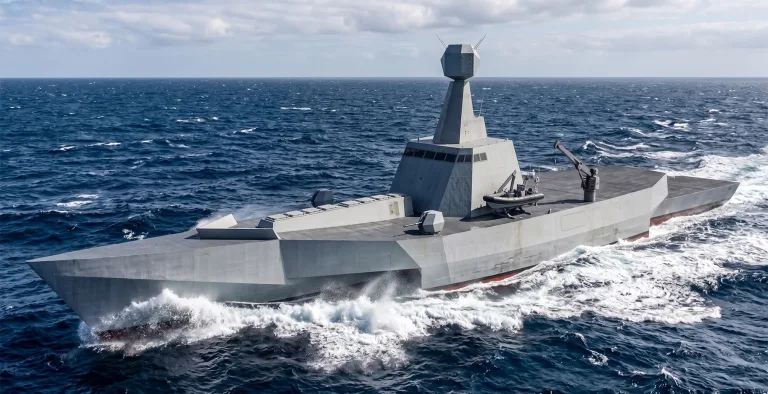
The Royal Navy is no longer describing its next air-defence ship as a larger successor to the Type 45. The UK Ministry of Defence says at least six Common Combat Vessels will instead form the crewed centre of a distributed system, working with four families of uncrewed missile, sensor, surface, and underwater platforms.
That is an architectural change, not merely a new class name. A conventional destroyer concentrates its radar, command system, and missile cells on one valuable hull. The announced “hybrid navy” concept aims to separate some of those functions. The Common Combat Vessel would act as a control hub; Type 91 uncrewed platforms would carry missiles, Type 92 platforms would provide underwater sensing, Type 93 would cover extra-large uncrewed underwater vehicles, and Type 94 would provide uncrewed sensors.
The attraction is clear. Distributed sensors can widen the defended area, while offboard missile magazines can add firepower without proportionally increasing crew or putting every interceptor on the command ship. Losing one uncrewed platform may be less consequential than losing a destroyer.
But the announcement leaves the decisive engineering questions open. It gives no radar specification, missile-cell count, autonomy level, communications design, or plan for command when links are jammed or severed. A distributed force is resilient only if it can continue to sense, decide, and engage after the network has been degraded.
The monitor question is whether the Type 91–94 platforms become funded, testable systems with defined interfaces—and whether trials show that the group can conduct air defence under electronic attack without recreating a single point of failure on the Common Combat Vessel.